
Website design for transport and logistics companies
Corporate clients award haulage contracts to firms they can verify. Your fleet list is the evidence.
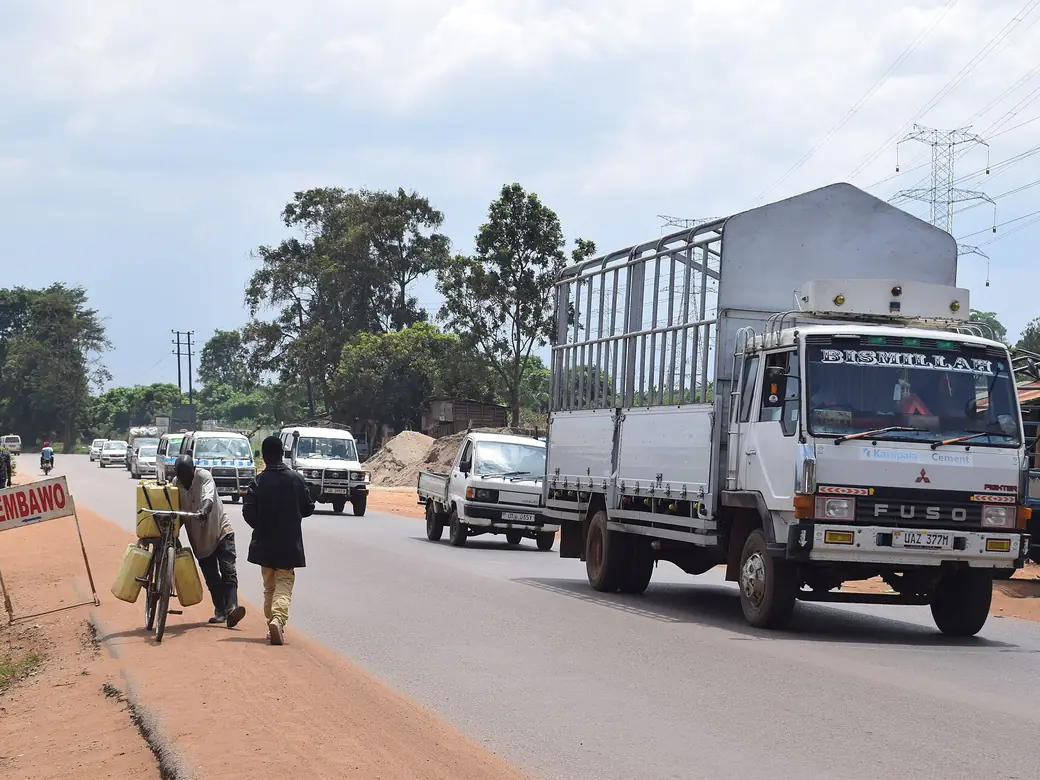
Typical for a transport and logistics website
From deposit to live, depending on size
We write the pages, you check them
Domain and hosting in your name
Transport and logistics in the region runs on trust and capacity. A company moving cargo from Mombasa to Kampala, or distributing to upcountry branches, needs to know you have the trucks, the routes and the paperwork. That is a website's job, not a WhatsApp status.
We build logistics sites around capability: fleet, routes, services, compliance, and a quote form that asks for cargo type, weight, origin and destination so you can price without four rounds of questions.
What a cargo client is really buying is certainty, and the thing they most want to know is where their goods are. You do not need expensive tracking hardware to answer that. A stated routine - a message at loading, a message at any border, a message on arrival, and a photograph of the signed delivery note - is what separates operators who get repeat business from those who get one load and a complaint. Describe that routine on your website, because nobody else does.
If you handle cross-border or clearing work, that is where the enquiries with money in them are. A client moving cargo through Mombasa or Dar, or bringing goods across at Malaba, Busia, Mutukula or Elegu, is looking for somebody who knows the paperwork and will not leave their container sitting while demurrage runs. Say what you actually handle - customs clearance, transit documents, bonded warehousing, escort where it is required - and what a typical timeline looks like from arrival to delivery. Publish your licences and your goods-in-transit cover. A shipper who has been burnt once reads that page far more carefully than they read anything about your fleet.
The mistake we see most often
Most transporters describe themselves as "reliable and efficient", which every competitor also claims. What actually wins is specifics: how many trucks, what capacity, which corridors, what insurance cover on cargo.
What a transport and logistic website needs
- Fleet list with vehicle types and tonnage
- Routes and corridors you run - Mombasa, Dar, Juba, Kigali, upcountry
- Services: haulage, courier, clearing and forwarding, warehousing, cold chain
- Cargo insurance and licences, stated clearly
- A quotation form capturing cargo, weight, origin, destination and dates
- Tracking arrangements and how clients get updates
Included as standard
Every site we build leaves our hands with all of this. None of it is an extra.
Written to be found
Page titles, headings and text built around what your customers actually type into Google.
Fast on slow connections
Compressed images, no page-builder bloat. Pages open in about two seconds instead of eating someone's data.
Yours to edit
A login, a training session and a recording. Change prices and photos yourself, whenever you like.
What it costs
A transport and logistics website usually lands in the Business package, from UGX 750,000. Half to start, half at launch.
Domain and hosting are separate and paid to the hosting company - roughly UGX 150,000 to 300,000 for the first year, registered in your name.
Questions from transport and logistics
Should we publish rates?
Rarely, because they depend on cargo, route and fuel. What you should publish is an indicative structure - per tonne, per trip, per cubic metre - so a prospect understands how you price before requesting a quote.
Do we need online tracking?
Full live tracking is a large build. Most Ugandan operators do fine with a status enquiry - the client sends a reference and gets an update. Add real tracking when contract clients begin demanding it as a condition.
We only do local deliveries. Is this overkill?
No, just smaller. A courier or boda delivery business needs zones, rates, turnaround time and a booking form. That is a starter site, and it takes you off the WhatsApp-only treadmill.
We cannot afford GPS tracking. Can we still compete?
Easily, if you are disciplined about communication. Most clients do not actually want a live map, they want to stop worrying. Promise and then deliver a simple sequence: a WhatsApp message with a photograph when the truck is loaded, an update at each border or major stop, a call if anything delays the trip, and a photograph of the signed delivery note on arrival. Publish that as your standard on the website so clients know exactly what to expect. It costs you nothing but attention, and it beats a tracking link that the client has to remember to check and that nobody explains when it stops updating.
Should we publish our licences and insurance cover?
Yes, and be specific. State your goods-in-transit cover and the limit, name the classes of licence you hold, and mention any association or bond arrangements you operate under. A client trusting you with a container is trying to work out what happens on the day something goes wrong, and vague reassurance does not answer it. Add your claims process in two or three lines: who to call, what you need from them, and how long a claim typically takes. Nobody enjoys writing that page and it is the one that wins contracts, because everybody else is still talking about their commitment to excellence.
Related
Garages and car dealers
A broken-down car is an urgent local search. Be the garage that comes up, with a price and a phone number.
Read moreConstruction and contractors
Tender committees search bidders before shortlisting. A firm they cannot verify online is a firm they can quietly drop.
Read moreFarms and agribusiness
Buyers and exporters search for supply. If your capacity is not online, you are not in the conversation.
Read moreReady to talk about your transport and logistic website?
One WhatsApp message with what your business does is enough. We reply with what your site needs, what it costs and how long it takes.