
Website design for restaurants and cafés in Uganda
Your menu is the website. Get it online with prices and stop paying a delivery app 25 percent to show it.
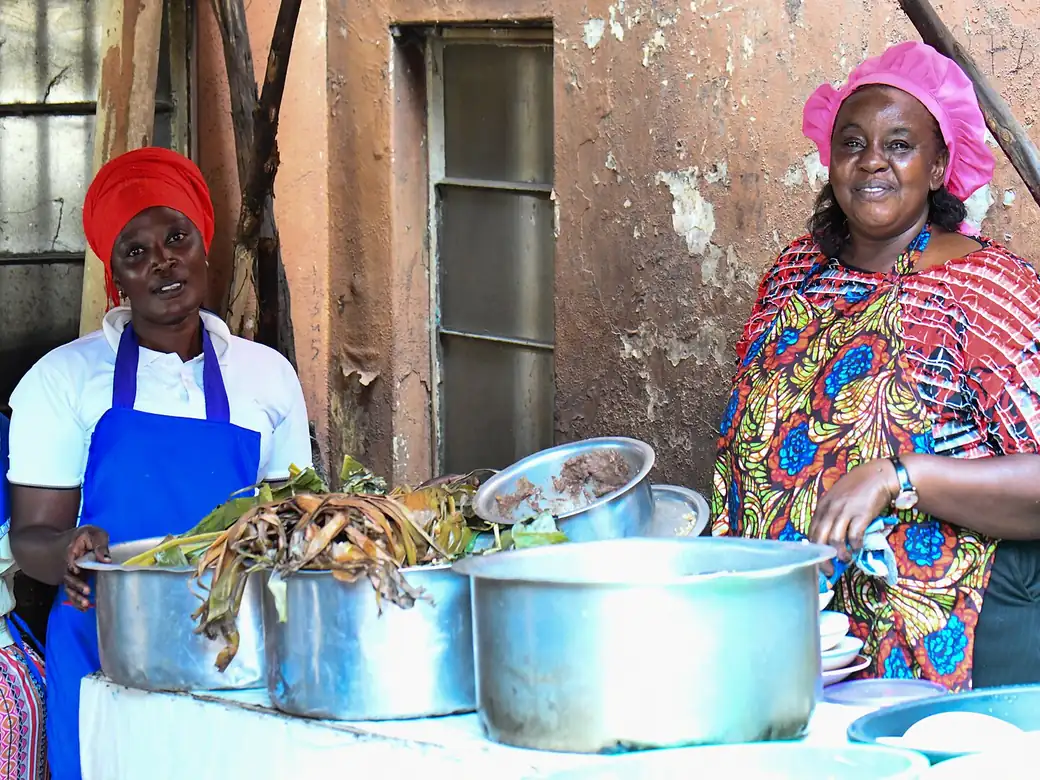
Typical for a restaurants and cafés website
From deposit to live, depending on size
We write the pages, you check them
Domain and hosting in your name
Two things decide whether someone eats with you: the menu and the price. Both usually live in a photo album on Facebook, sideways, from last year. Meanwhile the delivery apps have your menu typed out beautifully and charge you a quarter of every order for the privilege.
We put your menu on your own site as real text - which means Google can read every dish - with an order button that goes straight to your WhatsApp and costs you nothing per order.
One technical detail costs restaurants more customers than anything else: publishing the menu as a photograph of a printed sheet. On a phone it is unreadable without pinching and zooming, and to a search engine it is a blank space, so you never appear when somebody searches for the dish you are known for. A menu typed as ordinary text on the page is readable, searchable and takes ten minutes to update.
The menu answers what you sell. What it does not answer is what is happening today, and that is what people check before they leave the house. Are you open on the public holiday. Is the Saturday buffet on. What is today's special and what does it cost. Do you have a space for a birthday of twenty people, and do you do outside catering for an office lunch. Those are all sales you are already able to make and are probably losing to a phone that rings out. One short page for functions and outside catering, plus a line on the home page for today, covers most of it.
The mistake we see most often
A menu posted as an image cannot be searched. When somebody types "where to eat pilau in Kampala" or "best rolex Ntinda", a photo of your menu board is invisible. Typed-out dishes are how you get found for the food you actually cook.
What a restaurants and café website needs
- The full menu as text, with current prices, by section
- A WhatsApp order button with your delivery areas and fees
- Table reservation for larger groups and events
- Opening hours, including the kitchen's last order time
- Photos of your actual dishes, not a stock photo of a burger
- Parking, outside seating, private rooms and whether you do events
Included as standard
Every site we build leaves our hands with all of this. None of it is an extra.
Google Business Profile
Set up and verified so you appear on Google Maps with your hours, photos and phone number.
Written to be found
Page titles, headings and text built around what your customers actually type into Google.
Fast on slow connections
Compressed images, no page-builder bloat. Pages open in about two seconds instead of eating someone's data.
What it costs
A restaurants and cafés website usually lands in the Starter package, from UGX 350,000. Half to start, half at launch.
Domain and hosting are separate and paid to the hosting company - roughly UGX 150,000 to 300,000 for the first year, registered in your name.
Questions from restaurants and cafés
We are already on the delivery apps. Why bother?
Because they take 20 to 30 percent of every order and the customer belongs to them, not you. Regulars who order through your own WhatsApp cost you nothing and can be reached directly next time you have an offer. Keep the apps for discovery, push regulars to your own line.
Our prices change. Is that a problem?
No. You get a login and change a price in under a minute. That is the whole point of building on WordPress instead of handing you a locked design you have to call someone to edit.
Do we need a table booking system?
Only if you turn tables away. Most Kampala restaurants do better with a simple reservation request for groups of six or more, handled by whoever runs the floor.
Why should the menu be text rather than a photo or PDF?
Because a photograph of a menu cannot be read easily on a phone and cannot be read at all by Google. Somebody searching for a specific dish near them will never find you if your only mention of it is inside an image. Typed as text, every item on your menu becomes something you can be found for, the page loads faster, and customers can actually read it one-handed on the way to you. It is also far quicker to change a price or remove an item than to redesign and re-photograph a printed sheet. Keep the designed version for the table; put the readable version on the website.
Our food photos never look like the food. What do we do?
Shoot in daylight, near a window or outside in shade, with the flash off. Use your normal plates on a plain surface, wipe the rim, and take the picture from slightly above and slightly to the side rather than straight down. Photograph the dish the moment it is plated, not after it has sat for ten minutes under a lamp. Take ten shots of each dish and keep one. Above all, photograph the portion you actually serve. A picture that flatters the food and then disappoints at the table costs you the return visit and earns a review that mentions it. If your business is built on how the food looks, two hours with a photographer once a year is cheap.
Related
Hotels and lodges
Every booking through an agency costs you 15 to 20 percent. A direct booking route pays for the website in one busy month.
Read moreEvent planners and venues
Every enquiry starts with a date and a number of guests. Build the form around that and quote properly first time.
Read moreSupermarkets and retail shops
Delivery is the opportunity. Customers will pay for a shop that brings the order to Kiwatule by evening.
Read moreReady to talk about your restaurants and café website?
One WhatsApp message with what your business does is enough. We reply with what your site needs, what it costs and how long it takes.